
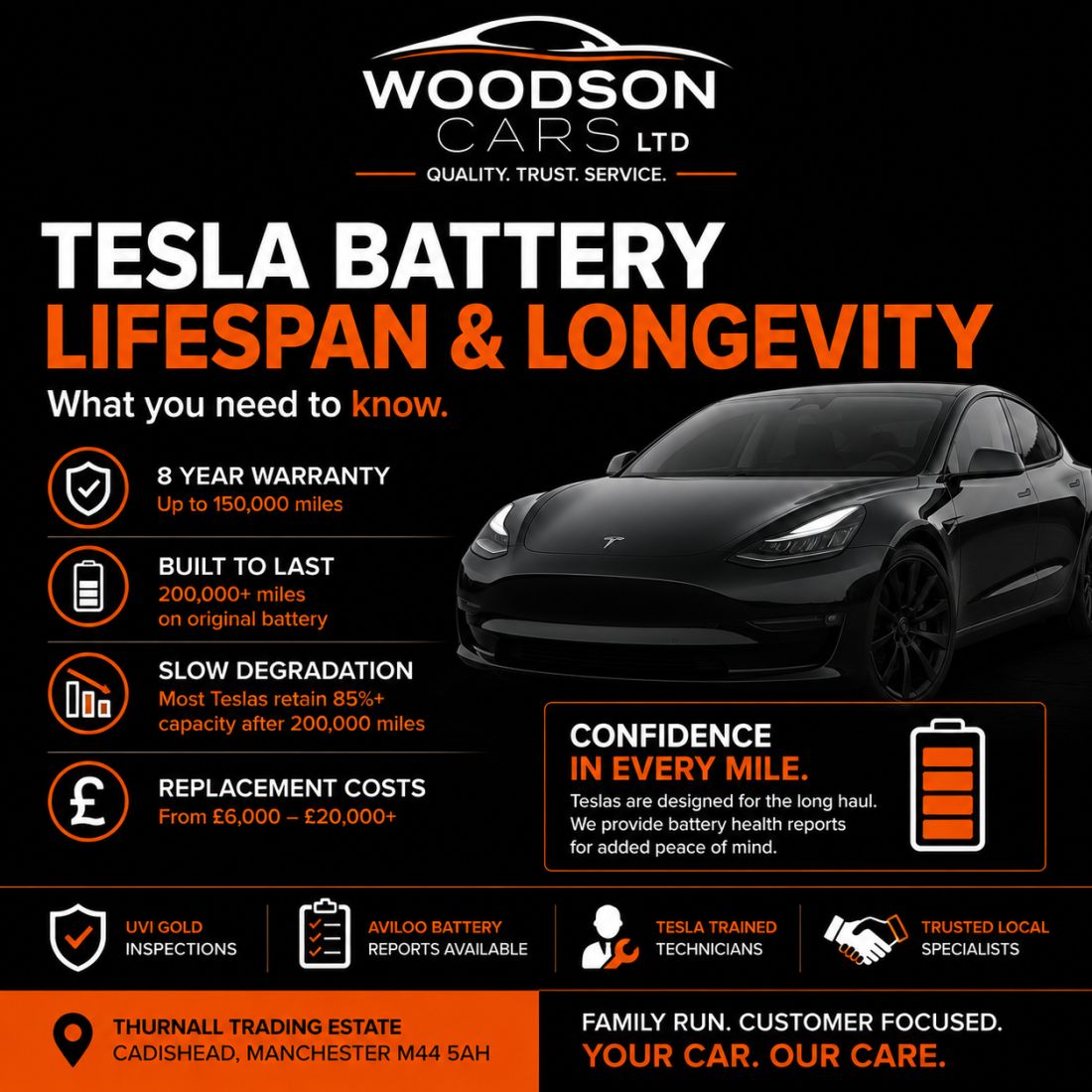
Tesla Battery Lifespan & Longevity Guide (2026) One of the biggest questions people ask when buying a used Tesla is: "How long will the battery last?" The good news is that real-world data continues to show that Tesla batteries are lasting significantly longer than many people originally expected. For most owners, the battery is likely to outlast their ownership of the vehicle, and many Teslas have exceeded 200,000 miles on the original battery pack. Tesla Battery Warranty Tesla provides one of the most comprehensive EV battery warranties available. Model Battery Warranty Model S 8 Years / 150,000 miles Model X 8 Years / 150,000 miles Model 3 Rear-Wheel Drive 8 Years / 100,000 miles Model 3 Long Range & Performance 8 Years / 120,000 miles Model Y Rear-Wheel Drive 8 Years / 100,000 miles Model Y Long Range & Performance 8 Years / 120,000 miles During the warranty period, Tesla guarantees the battery will retain at least 70% of its original capacity. If battery capacity falls below this threshold due to a manufacturing defect during the warranty period, Tesla may repair or replace the battery under warranty. How Long Does a Tesla Battery Really Last? Current real-world evidence is very encouraging. Most Teslas experience: Faster degradation during the first 10,000–20,000 miles. A much slower rate of degradation thereafter. Many vehicles retaining over 85–90% of their original battery capacity after well over 100,000 miles. For the majority of drivers, a Tesla battery is expected to remain usable for 200,000 to 300,000 miles, and some high-mileage examples have gone significantly further on their original packs. Typical Battery Degradation Although every vehicle is different, a common pattern looks like this: Mileage Typical Battery Health New 100% 20,000 miles 97–99% 50,000 miles 94–97% 100,000 miles 90–95% 150,000 miles 88–93% 200,000 miles 85–90% These figures are representative of many real-world vehicles rather than guaranteed outcomes. Factors such as climate, charging habits and driving style all influence battery health. What Causes Battery Degradation? All lithium-ion batteries lose capacity over time. The main factors include: Charging Habits For everyday use: Charge to around 80% if practical. Only charge to 100% when you need maximum range (except some LFP-equipped Teslas, which Tesla recommends charging to 100% regularly for calibration). Avoid leaving the battery at 100% for extended periods. Rapid Charging Tesla Supercharging is designed to be safe, but relying on rapid charging for nearly all charging can contribute to slightly faster degradation over many years. Occasional Supercharging is not generally considered a concern. High Temperatures Heat is one of the biggest contributors to battery ageing. Tesla's liquid thermal management system helps protect the battery, but regularly parking in extreme heat while fully charged can accelerate degradation. Very Low Battery Levels Repeatedly allowing the battery to reach extremely low states of charge is best avoided. Keeping the battery within a moderate operating range for everyday driving is generally considered beneficial. Does Mileage Matter? Interestingly, battery age is often just as important as mileage. A five-year-old Tesla with 50,000 miles may show similar degradation to another five-year-old Tesla with 90,000 miles, depending on usage patterns. Calendar ageing affects all lithium-ion batteries, even if they are not heavily used. How Can You Check Battery Health? If you're buying a used Tesla, battery health can be assessed in several ways: Tesla's own battery health diagnostics. Independent battery health reports such as AVILOO. Third-party apps that estimate State of Health (where appropriate). These provide a clearer picture than simply looking at the estimated range displayed on the dashboard. Can Individual Cells Be Replaced? Tesla battery packs contain thousands of individual cells grouped into modules. In many cases, specialist repairers can replace faulty modules or repair battery packs without replacing the entire battery, although Tesla's own approach often involves replacing the complete pack or a remanufactured pack depending on the fault and warranty status. Replacement Costs Battery replacement costs vary considerably depending on: Model Battery size Whether the pack is new or remanufactured Labour requirements Typical out-of-warranty estimates are: Model Approximate Cost Model 3 £6,000–£12,000+ Model Y £7,000–£13,000+ Model S £10,000–£20,000+ Model X £10,000–£20,000+ Costs vary widely, and many replacements use remanufactured battery packs. Always obtain a model-specific quotation before making assumptions. Is Battery Failure Common? The evidence suggests that outright battery failure is relatively uncommon in modern EVs. Large-scale data indicates that battery replacements due to failure are rare in newer electric vehicles, with most remaining on their original battery pack well beyond 100,000 miles. Tips to Maximise Tesla Battery Life Charge at home whenever possible. Use Superchargers when needed, rather than for every charge. Avoid leaving the battery at 100% for long periods unless necessary. Keep the battery between roughly 20–80% for routine use (except where Tesla gives different guidance for certain battery chemistries). Precondition the battery before rapid charging. Keep software updated. Park in the shade or a garage during prolonged hot weather when possible. Should Battery Degradation Put You Off Buying a Used Tesla? For most buyers, the answer is no. Real-world evidence consistently shows that Tesla batteries degrade gradually rather than suddenly, with most retaining a high proportion of their original capacity after many years of use. The battery warranty also provides additional reassurance during the covered period. If you're buying a used Tesla, it's sensible to request evidence of battery health where available. A recent battery health assessment, together with a thorough mechanical inspection, can provide valuable confidence before you buy.
Tesla Battery Lifespan & Longevity Guide (2026)
One of the biggest questions people ask when buying a used Tesla is:
"How long will the battery last?"
The good news is that real-world data continues to show that Tesla batteries are lasting significantly longer than many people originally expected. For most owners, the battery is likely to outlast their ownership of the vehicle, and many Teslas have exceeded 200,000 miles on the original battery pack.
Tesla Battery Warranty
Tesla provides one of the most comprehensive EV battery warranties available.
| Model | Battery Warranty |
|---|---|
| Model S | 8 Years / 150,000 miles |
| Model X | 8 Years / 150,000 miles |
| Model 3 Rear-Wheel Drive | 8 Years / 100,000 miles |
| Model 3 Long Range & Performance | 8 Years / 120,000 miles |
| Model Y Rear-Wheel Drive | 8 Years / 100,000 miles |
| Model Y Long Range & Performance | 8 Years / 120,000 miles |
During the warranty period, Tesla guarantees the battery will retain at least 70% of its original capacity. If battery capacity falls below this threshold due to a manufacturing defect during the warranty period, Tesla may repair or replace the battery under warranty.
How Long Does a Tesla Battery Really Last?
Current real-world evidence is very encouraging.
Most Teslas experience:
- Faster degradation during the first 10,000–20,000 miles.
- A much slower rate of degradation thereafter.
- Many vehicles retaining over 85–90% of their original battery capacity after well over 100,000 miles.
For the majority of drivers, a Tesla battery is expected to remain usable for 200,000 to 300,000 miles, and some high-mileage examples have gone significantly further on their original packs.
Typical Battery Degradation
Although every vehicle is different, a common pattern looks like this:
| Mileage | Typical Battery Health |
|---|---|
| New | 100% |
| 20,000 miles | 97–99% |
| 50,000 miles | 94–97% |
| 100,000 miles | 90–95% |
| 150,000 miles | 88–93% |
| 200,000 miles | 85–90% |
These figures are representative of many real-world vehicles rather than guaranteed outcomes. Factors such as climate, charging habits and driving style all influence battery health.
What Causes Battery Degradation?
All lithium-ion batteries lose capacity over time. The main factors include:
Charging Habits
For everyday use:
- Charge to around 80% if practical.
- Only charge to 100% when you need maximum range (except some LFP-equipped Teslas, which Tesla recommends charging to 100% regularly for calibration).
- Avoid leaving the battery at 100% for extended periods.
Rapid Charging
Tesla Supercharging is designed to be safe, but relying on rapid charging for nearly all charging can contribute to slightly faster degradation over many years.
Occasional Supercharging is not generally considered a concern.
High Temperatures
Heat is one of the biggest contributors to battery ageing.
Tesla's liquid thermal management system helps protect the battery, but regularly parking in extreme heat while fully charged can accelerate degradation.
Very Low Battery Levels
Repeatedly allowing the battery to reach extremely low states of charge is best avoided.
Keeping the battery within a moderate operating range for everyday driving is generally considered beneficial.
Does Mileage Matter?
Interestingly, battery age is often just as important as mileage.
A five-year-old Tesla with 50,000 miles may show similar degradation to another five-year-old Tesla with 90,000 miles, depending on usage patterns.
Calendar ageing affects all lithium-ion batteries, even if they are not heavily used.
How Can You Check Battery Health?
If you're buying a used Tesla, battery health can be assessed in several ways:
- Tesla's own battery health diagnostics.
- Independent battery health reports such as AVILOO.
- Third-party apps that estimate State of Health (where appropriate).
These provide a clearer picture than simply looking at the estimated range displayed on the dashboard.
Can Individual Cells Be Replaced?
Tesla battery packs contain thousands of individual cells grouped into modules.
In many cases, specialist repairers can replace faulty modules or repair battery packs without replacing the entire battery, although Tesla's own approach often involves replacing the complete pack or a remanufactured pack depending on the fault and warranty status.
Replacement Costs
Battery replacement costs vary considerably depending on:
- Model
- Battery size
- Whether the pack is new or remanufactured
- Labour requirements
Typical out-of-warranty estimates are:
| Model | Approximate Cost |
|---|---|
| Model 3 | £6,000–£12,000+ |
| Model Y | £7,000–£13,000+ |
| Model S | £10,000–£20,000+ |
| Model X | £10,000–£20,000+ |
Costs vary widely, and many replacements use remanufactured battery packs. Always obtain a model-specific quotation before making assumptions.
Is Battery Failure Common?
The evidence suggests that outright battery failure is relatively uncommon in modern EVs.
Large-scale data indicates that battery replacements due to failure are rare in newer electric vehicles, with most remaining on their original battery pack well beyond 100,000 miles.
Tips to Maximise Tesla Battery Life
- Charge at home whenever possible.
- Use Superchargers when needed, rather than for every charge.
- Avoid leaving the battery at 100% for long periods unless necessary.
- Keep the battery between roughly 20–80% for routine use (except where Tesla gives different guidance for certain battery chemistries).
- Precondition the battery before rapid charging.
- Keep software updated.
- Park in the shade or a garage during prolonged hot weather when possible.
Should Battery Degradation Put You Off Buying a Used Tesla?
For most buyers, the answer is no.
Real-world evidence consistently shows that Tesla batteries degrade gradually rather than suddenly, with most retaining a high proportion of their original capacity after many years of use. The battery warranty also provides additional reassurance during the covered period.
If you're buying a used Tesla, it's sensible to request evidence of battery health where available. A recent battery health assessment, together with a thorough mechanical inspection, can provide valuable confidence before you buy.