
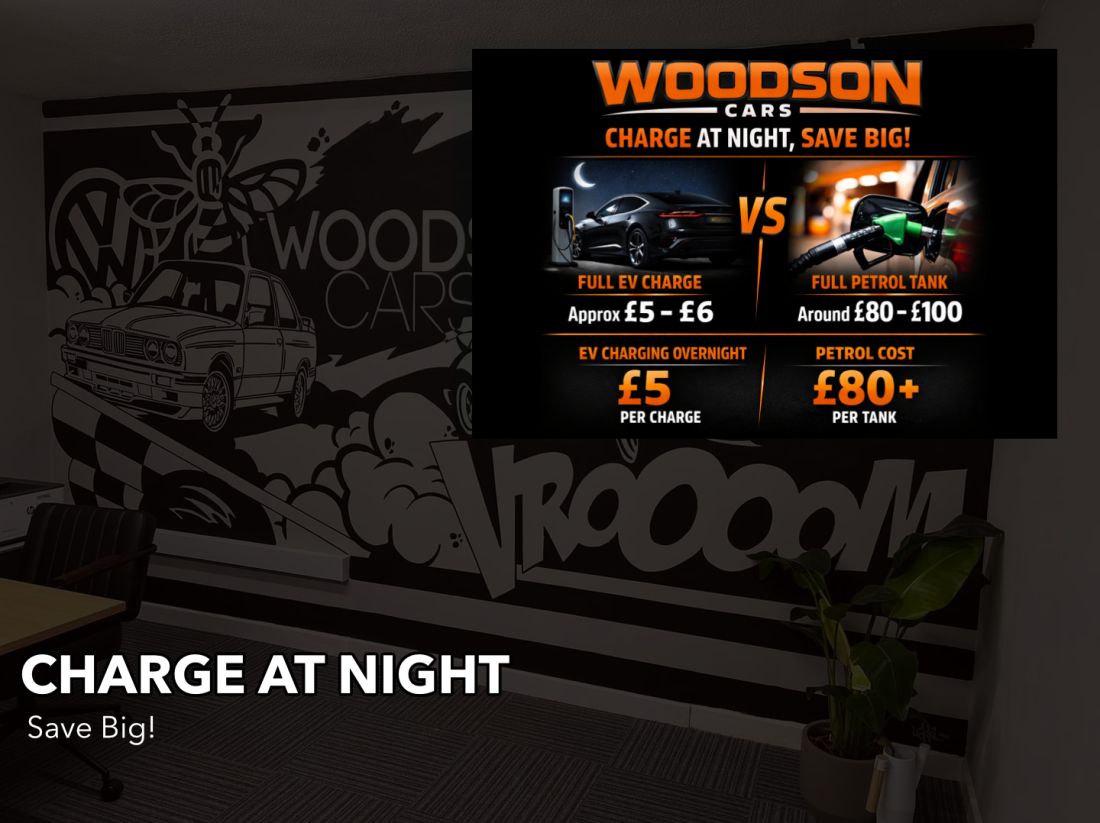
Overnight EV Charging vs Petrol Costs | Woodson Cars Manchester
What E.ON Next announced
E.ON Next said that EV drivers can still benefit from cheap overnight charging despite uncertainty in energy markets caused by the Middle East conflict and rising wholesale gas prices.
The company updated pricing for two EV tariffs:
Next Drive Smart (latest version)
Off-peak rate: about 8.5p/kWh
Time: 12am–6am
Day rate: about 30.87p/kWh
Next Drive Fixed
Off-peak rate: about 9.5p/kWh
Time: 12am–6am
Day rate: about 32.37p/kWh
E.ON says drivers using the overnight window could save roughly:
£117 per year on Next Drive Smart
£59 per year on Next Drive Fixed compared with charging at the standard energy price cap rate.
Why the Iran conflict is being mentioned
The current Middle East conflict has pushed global gas prices up sharply, which feeds into UK electricity prices because gas still generates much of the country’s power.
Because of this volatility:
Some suppliers have pulled or changed fixed tariffs.
Analysts warn the UK energy price cap could rise again later in 2026 if wholesale prices stay high.
E.ON’s message is basically:
? even if daytime electricity gets more expensive, charging overnight on EV tariffs should remain cheaper.
What this means for EV drivers
If you charge at home:
Night charging: ~8.5p/kWh
Typical public rapid charger: ~60–80p/kWh
Standard home tariff: ~28–32p/kWh
So a 60kWh EV battery roughly costs:
£5–£6 overnight
£18+ on a normal tariff
£35–£45 on public rapid charging
Big takeaway
The key point of the announcement is that EV owners with smart tariffs are somewhat protected from price volatilitybecause they can charge when electricity demand (and prices) are lowest.