
Petrol vs Electric Cars UK 2026 | Which Costs Less to Run?
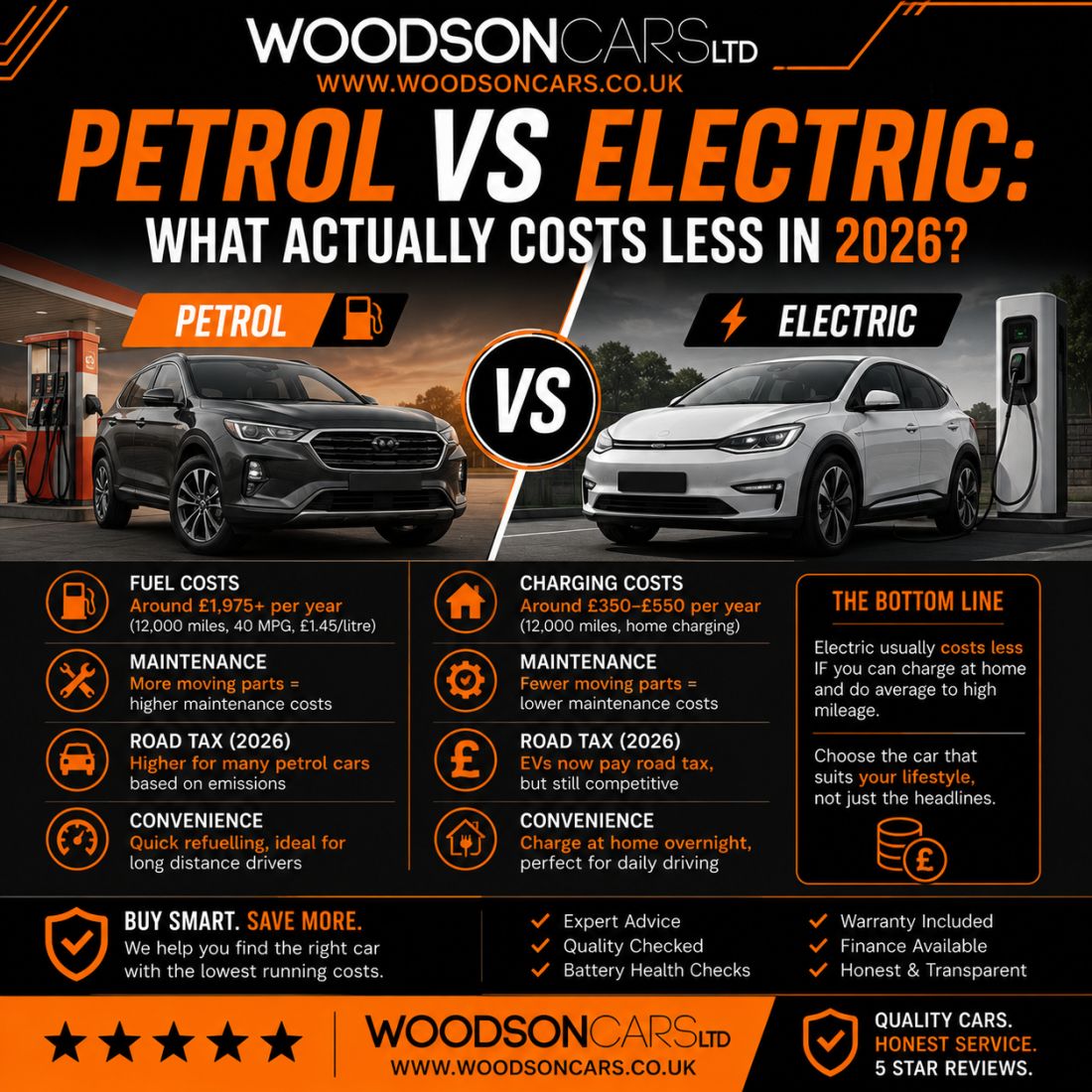
Petrol vs Electric: What Actually Costs Less in 2026?
With fuel prices, electricity tariffs, road tax changes and maintenance costs constantly changing, many drivers are asking the same question in 2026:
Does an electric car actually save money anymore?
The answer is:
For many drivers — yes. But it depends entirely on how you use the car.
At Woodson Cars we regularly speak with customers comparing petrol, diesel, hybrid and electric vehicles, and the real-world cost differences can still be significant.
Here’s what drivers should actually be comparing in 2026.
1. Fuel vs Charging Costs
This is usually the biggest saving area for EV owners.
Petrol Example
A typical petrol family SUV averaging 40 MPG:
- 12,000 miles per year
- Petrol at £1.45 per litre
Approximate annual fuel cost:
?? £1,975+ per year
Electric Example
A typical EV averaging 3.5 miles per kWh:
- 12,000 miles per year
- Home overnight charging at 7p–10p per kWh
Approximate annual charging cost:
?? £350–£550 per year
That can mean savings of over £1,000 per year for some drivers.
The key factor:
Home charging makes the biggest difference.
Drivers relying mostly on expensive public rapid chargers may see much smaller savings.
2. Maintenance Costs
Electric vehicles have fewer moving parts than petrol cars.
That means no:
- Engine oil changes
- Timing belts
- Clutches
- Exhaust systems
- DPF systems
- Turbochargers
- Traditional automatic gearbox servicing
This can significantly reduce long-term maintenance costs.
However, EVs still require:
- Tyres
- Suspension components
- Brake servicing
- Coolant maintenance
- Battery health monitoring
At Woodson Cars we also place strong emphasis on EV inspections and battery reporting on electric vehicles.
3. Road Tax in 2026
This has changed significantly.
Electric vehicles are no longer completely exempt from Vehicle Excise Duty (VED).
From 2025 onward:
- Most EVs now pay standard road tax
- Expensive car supplement rules can also apply
This has reduced one of the previous ownership advantages of EVs.
However, many petrol and diesel vehicles still face:
- Higher tax bands
- Clean Air Zone concerns
- Higher emissions-related charges
4. Depreciation Matters More Than Ever
One of the biggest ownership costs is depreciation.
Some electric vehicles have seen:
- Strong used value drops
- Rapid technology changes
- Price pressure from new EV discounts
But equally:
- Some petrol and diesel vehicles are also dropping quickly due to emissions concerns and running costs.
The smartest buyers now focus on:
? Total ownership cost
? Reliability
? Running costs
? Warranty support
? Battery health
? Real-world range suitability
—not just fuel type alone.
5. Insurance Costs
Insurance varies massively between vehicles.
Some EVs can cost more to insure due to:
- Specialist parts
- Higher repair costs
- Longer repair times
But many mainstream EVs are now becoming far more affordable to insure as the market matures.
Always compare insurance quotes before buying either fuel type.
6. Charging Convenience vs Petrol Convenience
Petrol still wins for:
- Long-distance convenience
- Rural drivers
- Fast refuelling
- Drivers without home charging
Electric often wins for:
- Daily commuting
- Stop/start city driving
- Home charging convenience
- Lower day-to-day running costs
For many Manchester commuters, charging overnight at home can dramatically reduce monthly motoring costs.
So What Actually Costs Less in 2026?
Electric usually costs less IF:
? You can charge at home
? You do average-to-high mileage
? You mainly commute locally
? You use off-peak electricity tariffs
? You buy carefully with battery health checked
Petrol may still suit better IF:
? You do very low mileage
? You regularly travel long distances
? You cannot charge at home
? You rely heavily on motorway rapid charging
The Most Important Thing? Buy the RIGHT Car
The biggest mistake buyers make is choosing purely based on headlines or trends.
The best vehicle is the one that suits:
- Your driving habits
- Your budget
- Your charging access
- Your long-term running costs
At Woodson Cars we stock petrol, hybrid and electric vehicles and help customers compare real-world ownership costs — not just marketing claims.