
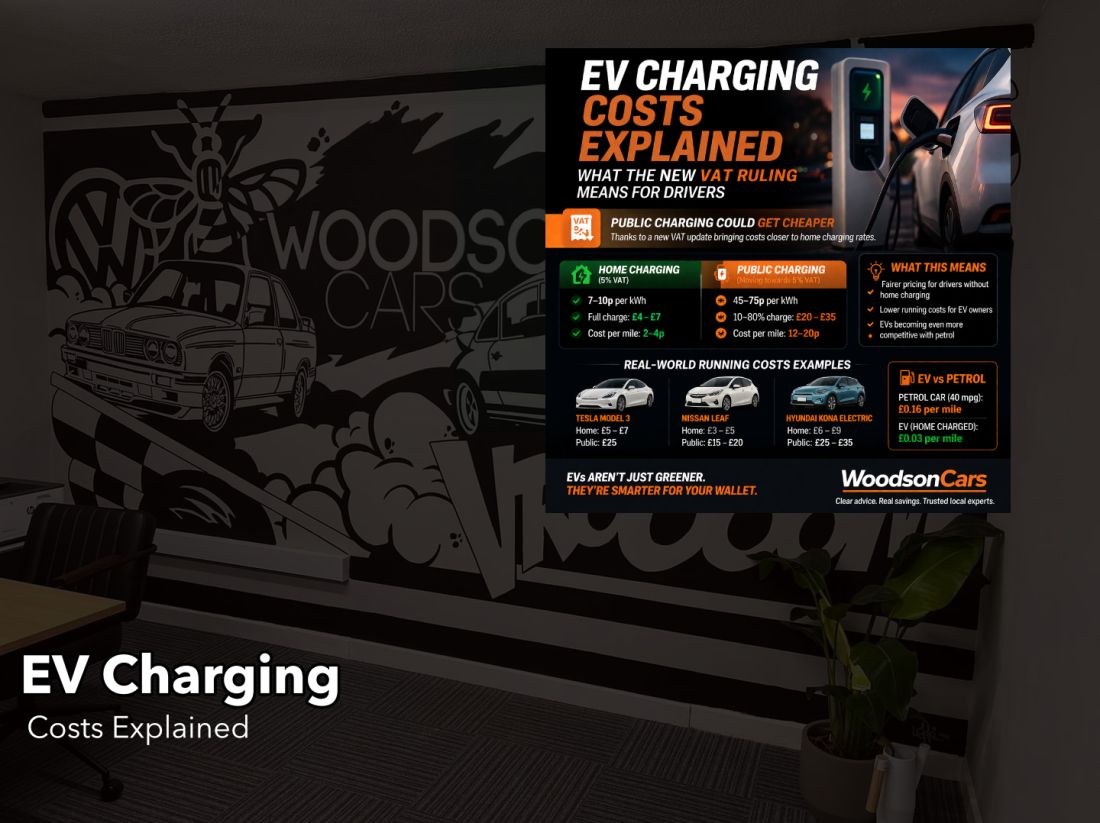
EV Charging Costs Explained UK | VAT Update & Real Running Costs
Why EV Charging Costs Have Been Confusing
One of the biggest frustrations for UK drivers considering electric cars has been inconsistent charging costs.
- Home charging has historically been taxed at 5% VAT
- Public charging has been taxed at 20% VAT
This created a situation where drivers without home charging (e.g. flats, terraced homes) were often paying significantly more — even though they had less choice.
What the VAT Update Means
The latest developments around EV charging VAT are aimed at addressing this imbalance.
In simple terms:
- There is growing pressure and movement towards reducing VAT on public charging
- The goal is to bring it closer in line with home charging rates (5%)
- Some providers and pricing models are already reflecting more competitive rates
???? While not every charger has changed overnight, the direction is clear:
Public charging is becoming more affordable and more accessible
Home Charging vs Public Charging: Real Costs
Charging at Home (Best Value)
- Typical overnight rate (e.g. Octopus Go): ~7–10p per kWh
- Average EV battery: 50–75 kWh
Example:
- Full charge: £4 – £7
- Range: 200–300 miles
???? That’s roughly 2–4p per mile
Public Charging (Rapid / Ultra-Rapid)
- Typical cost: 45–75p per kWh
- VAT historically higher (20%)
Example:
- 10–80% charge: £20 – £35
- Range added: 150–200 miles
???? Around 12–20p per mile
Real-World Example: Petrol vs EV
Let’s compare a typical family car:
Petrol Car (40 mpg):
- Fuel price: 144p/l
- Cost per mile: ~16p
Electric Car (Home Charging):
- Cost per mile: ~3p
Electric Car (Public Charging):
- Cost per mile: ~15p
???? The key takeaway:
- Home charging = huge savings
- Public charging = now competitive with petrol (and improving)
Popular EVs & Typical Running Costs
Tesla Model 3 (Standard Range)
- Real range: ~220–260 miles
- Home charging: ~£5–£7
- Public rapid: ~£25
Nissan Leaf (40kWh)
- Real range: ~130–160 miles
- Home charging: ~£3–£5
- Public charging: ~£15–£20
Hyundai Kona Electric (64kWh)
- Real range: ~250–300 miles
- Home charging: ~£6–£9
- Public charging: ~£25–£35
What This Means for You
The VAT shift (and wider pricing pressure) is important because it:
- Makes EV ownership more fair for drivers without home charging
- Reduces one of the biggest barriers to switching
- Brings EV running costs closer to — or below — petrol for more people
Woodson Insight: What We’re Seeing in 2026
At Woodson Cars, we’re seeing a clear trend:
- More customers choosing EVs and hybrids as fuel prices rise
- Increased confidence thanks to better infrastructure and clearer costs
- Customers using tools (like our EV calculator) to make data-driven decisions
If you’re unsure whether an EV works for your lifestyle, you can compare your own driving costs here:
???? https://www.woodsoncars.co.uk/ev-cost-comparison.php